23 November 2026
What to Look for When Choosing Moss Wall Materials
Presented by @wallcraftjournal
Starting with the right base
Building a moss wall that stays fresh and natural for years depends on the materials you pick at the start. The difference between a display that fades and one that holds its colour and texture often comes down to a few simple checks before you buy. This list covers the main points to consider so you can avoid common mistakes and end up with a piece that fits your space and lasts.
Check the type of moss used
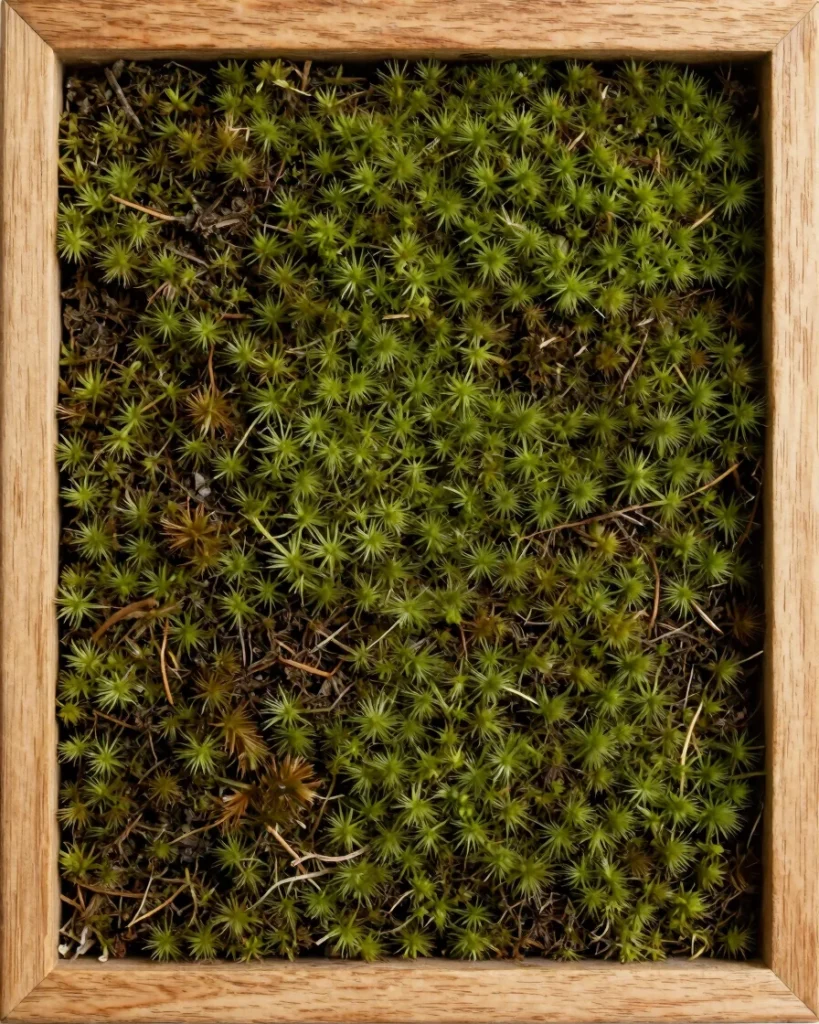
Not all moss is the same. Sheet moss, cushion moss, and reindeer moss each have a distinct look and handling requirements. Sheet moss grows in low, dense mats and gives a soft, forest-floor appearance. Cushion moss forms rounded clumps that add height and a more sculptural feel. Reindeer moss, despite its name, is actually a lichen and has a branching, coral-like structure that stays springy. For a balanced wall, many makers combine two or three types. Before you commit, decide whether you want a uniform surface or a layered, mixed-texture piece. That choice will guide everything from the backing board to the adhesive.
Confirm the moss is preserved, not dried or live
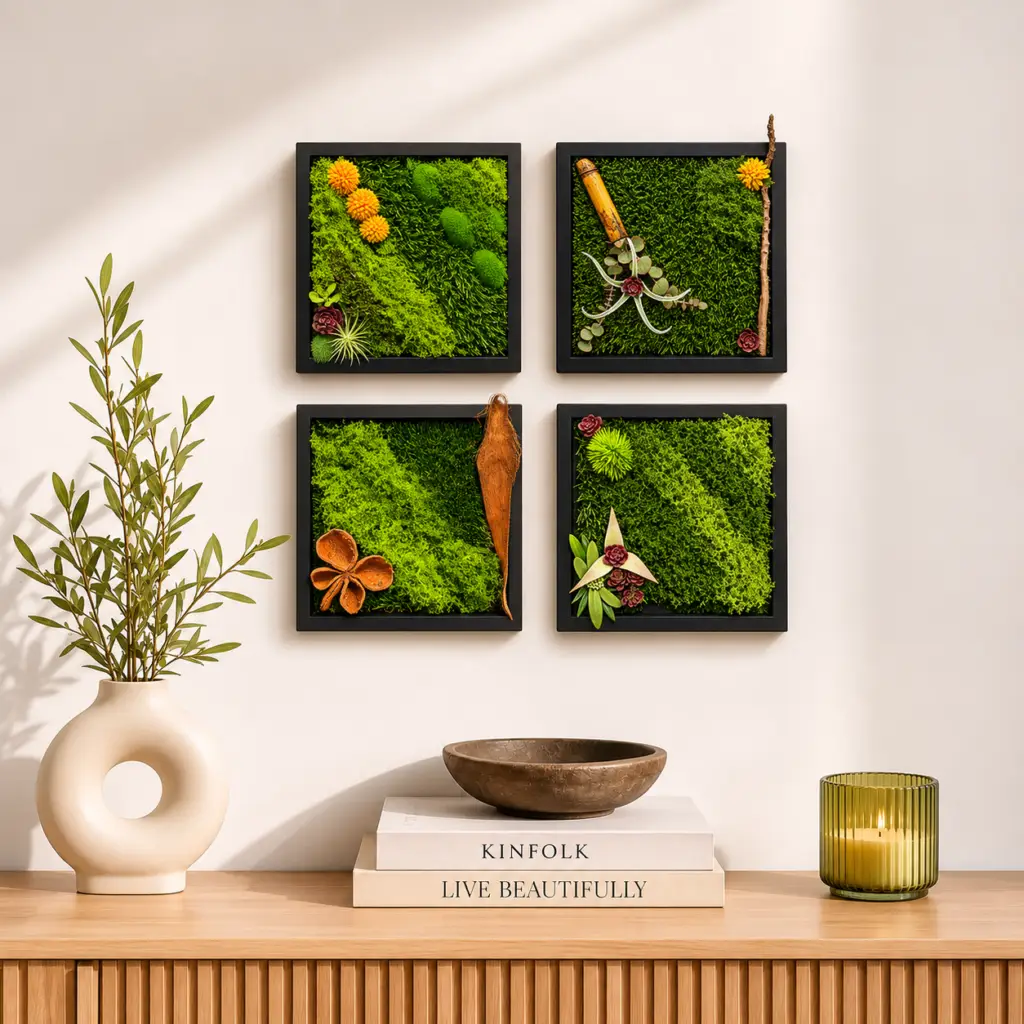
This is the most important distinction. Live moss needs soil, water, and light, and will not survive mounted on a wall. Dried moss crumbles and loses colour quickly. Preserved moss has been treated with a glycerin-based solution that replaces the water in the plant cells, keeping it soft and flexible without any ongoing care. A preserved moss wall requires no watering, no misting, and no sunlight. When you read product descriptions, look for the word "preserved" specifically. If the listing says "dried" or "natural," the material will not hold up in an interior display. For a long-lasting result, preserved moss art should be the only option you consider.
Examine the preservation process used
Even among preserved moss, the quality varies. Some suppliers use a dye and glycerin mix that sits on the surface, while others use a deeper infusion that penetrates the whole plant. Surface-treated moss can feel sticky or greasy to the touch and may shed dye onto your hands or nearby surfaces. Well-preserved moss feels soft and slightly supple, not wet or tacky. It should hold its colour even after gentle rubbing. If you are buying from a retailer, ask whether the moss has been colour-fast tested. A simple way to check at home is to press a piece of white paper against the moss and see if any colour transfers. If it does, the preservation is superficial and will likely fade or bleed over time.
Look at the colour palette and how it will age
Preserved moss comes in a wide range of colours, from deep greens and olive tones to bright lime, teal, or even dyed shades like pink or blue. Natural green shades tend to age more gracefully because they match what the eye expects from moss. Bright or unnatural colours can look striking at first but sometimes fade unevenly as the dye settles. Consider the room where the moss will hang. A north-facing room with low light will make dark green moss look almost black, while a bright room will bring out the lighter notes. If you are layering different colours, place them so they do not compete. A good rule: stick to two or three related tones for a cohesive look, and use brighter accents sparingly.
Assess the backing material and frame
The moss itself is only half the piece. The backing board provides structure and affects how the moss adheres. Common backings include plywood, MDF, acrylic, and plastic grids. Plywood and MDF are sturdy and hold glue well, but they can warp if the room is humid. Acrylic and plastic grids are moisture-resistant and light, making them easier to mount. The frame matters too. A wood frame adds warmth and helps contain the moss, but it must be sealed or treated to prevent moisture damage. Check whether the frame has a back panel or an open back. An open back allows air circulation, which helps prevent mould in damp climates. If the piece will hang in a bathroom or kitchen, choose a frame with a moisture barrier.
Verify the adhesive and mounting method
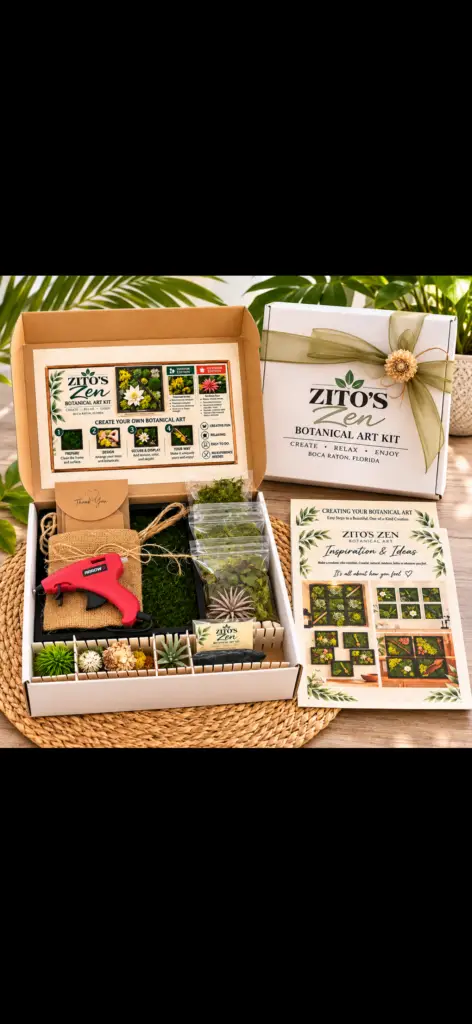
Moss can be attached with hot glue, spray adhesive, or mechanical fasteners like staples or pins. Each method has trade-offs. Hot glue bonds quickly but can leave visible strings or lumps if not applied carefully. Spray adhesive covers large areas evenly but requires good ventilation and a steady hand. Staples and pins hold well but are visible unless hidden under a layer of moss. For a clean finish, many makers use a combination: a strong adhesive for the base layer and smaller amounts of hot glue for detail work. If you are assembling your own wall, test the adhesive on a small piece of moss first to make sure it does not soak through or discolour the material. Avoid glues that contain solvents, as they can dissolve the glycerin in the moss and cause it to dry out.
Think about maintenance and dust
Even though preserved moss needs no water, it does collect dust over time. Flat, dense surfaces like sheet moss show dust more quickly than textured types like reindeer moss. If the wall is in a high-traffic area or near an air vent, plan to dust it every few months. A soft brush or a low-suction vacuum with a brush attachment works well. Avoid compressed air, which can blow loose pieces off. Some moss walls have a clear acrylic cover that protects the surface from dust and accidental touching. That option works well for offices or public spaces but can reduce the tactile feel. For a home setting, an open face is usually fine as long as you are comfortable with occasional light cleaning.
Consider the weight and mounting hardware
A moss wall can be surprisingly heavy. A 60-by-90-centimetre panel with a wood frame and dense moss can weigh several kilograms. The wall must be able to support that weight, especially if the piece is large. Drywall anchors or toggle bolts are usually necessary for anything over a few kilograms. Some makers include a French cleat or a hanging wire on the back. Check what hardware is provided and whether it matches your wall type. If you are mounting on plaster, brick, or concrete, you may need special anchors or a drill. Plan the installation before you buy the moss to avoid last-minute surprises.
Check the return policy and warranty
Preserved moss is a natural material, and slight variations in colour, texture, and size are normal. But if the moss arrives faded, shedding, or with an unpleasant chemical smell, you should have a way to send it back. A reasonable return window, such as 14 or 30 days, gives you time to inspect the piece in your own lighting. Some sellers also offer a warranty against colour fading for a year or more. That is a good sign that the preservation process is sound. Read the fine print: some policies exclude custom sizes or assembled frames. Knowing the policy before you order saves frustration if the piece does not match your expectations. Taking these steps before you choose your materials will save you time, money, and the disappointment of a wall that does not last. Whether you are building one yourself or buying a finished piece, each of these checks helps you end up with a display that looks natural and holds up in your space. A well-made moss wall brings a quiet sense of nature indoors, and the right materials make all the difference.